
The 3rd Foreign Parachute Regiment (3e REP) was a French Foreign Legion unit. It was activated in North Africa in 1949 as the 3rd Foreign Parachute Battalion (3e BEP). Its mission was to train and supply replacements for the hard-fighting Legion airborne battalions in Indochina, and it was repeatedly used to rebuild them after their heavy losses there. Over time, it became an operational unit in its own right, seeing action in Tunisia and at the beginning of the Algerian War. The 3e BEP was redesignated as the 3e REP in 1955 and disbanded later that year. In only six years, almost every Legion paratrooper who fought in the Far East passed through its ranks, making it a crucial but largely overlooked formation.
—
L'article en français : 3e Régiment étranger de parachutistes
—

Introduction
From 1831 onward, the French Foreign Legion was stationed in Algeria in North Africa and gradually adopted that country as its homeland. In 1848, Algeria became an integral part of France.
A century later, in 1948, the headquarters of the Foreign Legion was still located in there. That year, it was decided to create airborne units within the Legion to reinforce the French troops engaged against the Viet Minh in the First Indochina War, which had broken out at the end of 1946. Two foreign parachute battalions were therefore formed in Algeria – the 1er BEP and the 2e BEP – and then sent to the Far East.
To maintain their operational strength, it was necessary to create a training unit responsible for providing new reinforcements.
7e CIP: 7th Parachute Training Company
In April 1949, the Legion underwent a major reorganization. The once-prominent 1st Foreign Infantry Regiment (1er REI; now 1er RE) was reactivated in Algeria, replacing the Joint Depot (DCRE), which was permanently disbanded that same date. The 1er REI returned with a strength of two battalions, both assigned to basic training for new recruits.
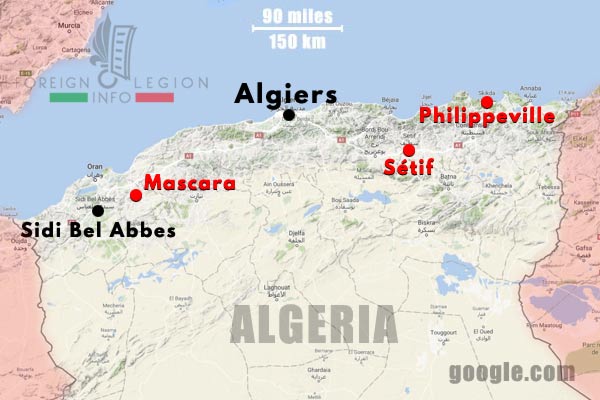
The regiment’s second battalion was split between two locations. The first was Fort National (today Larbaa Nath Irathen), near the capital Algiers, where the 5th and 6th Companies were stationed. The second was Mascara, a town in western Algeria. Prior to World War II, the garrison was known as one of the three main training centers of the Legion. There, on April 16, 1949, the 7th Company was formed as the 7th Parachute Training Company (7e Compagnie d’instruction parachutiste, 7e CIP).
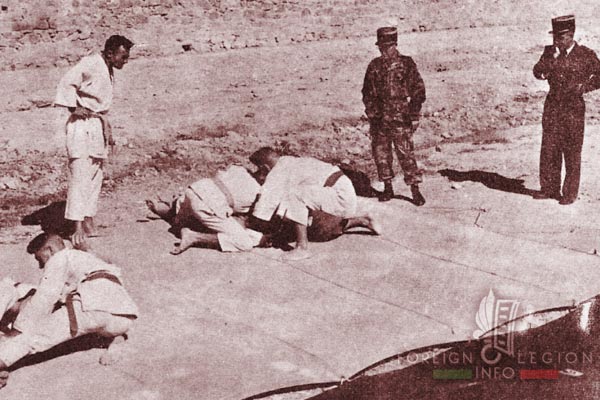
The 7e CIP was commanded by Captain Pierre Darmuzai, with other officers assisting him, notably Lieutenant Georges Marce and Second Lieutenant Yves Poitevin de la Croix-Vaubois. The primary mission of the 7e CIP was to provide basic training for new recruits who asked to serve in one of the two BEPs fighting in Indochina. This training lasted four months and, in addition to the usual infantry exercises, also included close-combat training as well as preparation for future jumps. The aircraft jumps required to obtain the parachutist qualification badge were carried out at the other end of Algeria, at Philippeville (today Skikda).
The 7e CIP remained in Mascara for six months, until October. At that time its strength reached about 250 men, a figure too high for a single company. It was therefore decided to reorganize it and move it closer to the training center at Philippeville.
Replaced in Mascara by the 5th and 6th Companies coming from Fort-National, the 7e CIP left the town for Sidi Bel Abbès, the motherhouse of the Foreign Legion since the 1860s. After spending some time there and being reinforced by new volunteers, the 7e CIP was transferred to eastern Algeria and stationed in Sétif. The company was administratively disbanded in this town on November 15, 1949.


3e BEP: 3rd Foreign Parachute Battalion, 1949–1951
On November 16, 1949, in Sétif, the former 7e CIP became the 3rd Foreign Parachute Battalion (3e Bataillon étranger de parachutistes, 3e BEP). Captain Pierre Darmuzai retained command. His new battalion consisted of six officers, 38 non-commissioned officers, and 275 legionnaires, a total of 319 men. Among these officers were Lieutenants Roger Faulques (who would later become a highly prominent figure), Paul Delearde, and Jean Borel. Second Lieutenant Poitevin de la Croix-Vaubois remained, together with the commanding officer, the only member from the early days of the former company.
The 3rd Battalion was composed of an HQ unit (CCB) and three training and transit companies (the 9th, 10th, and 11th). Their numbering may seem surprising at first glance, but in fact followed a common practice: the 1er BEP was made up of the 1st to 4th Companies, the 2e BEP of the 5th to 8th Companies, and the 3e BEP of the 9th to 11th Companies.
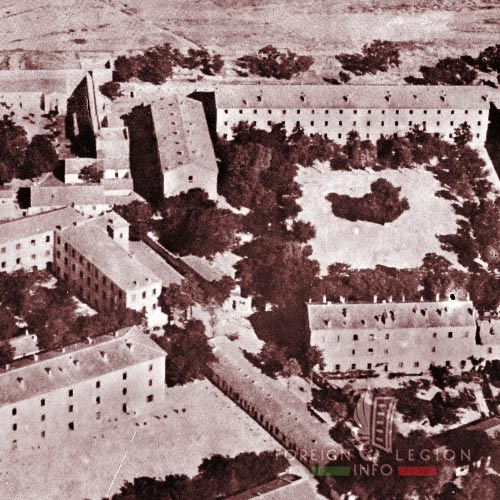
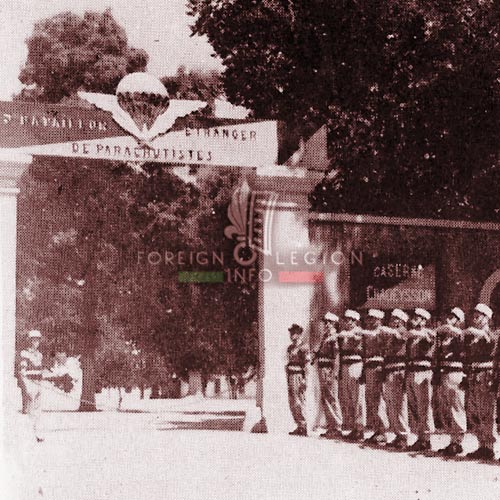
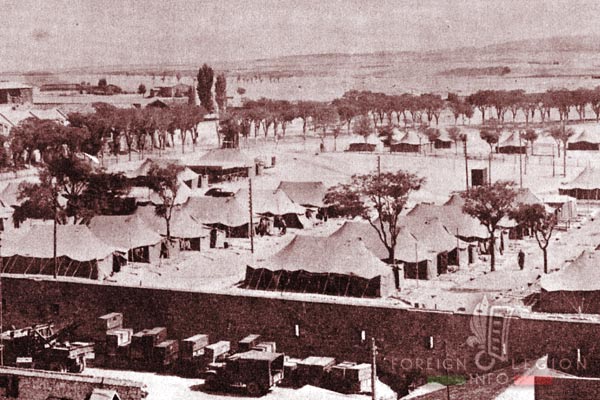
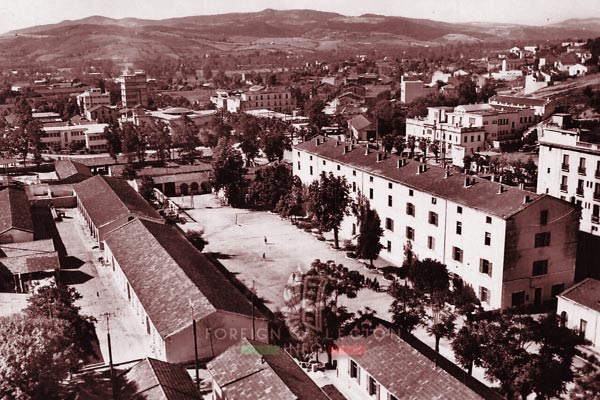
In Sétif, the new battalion was stationed at Caserne Chadeysson, an old military barracks which, until January 1949, had housed its sister battalion, the 2e BEP.
The 3e BEP was attached to the 41st Parachute Demi-Brigade (41e DBP). Located about 110 miles (180 km) northeast of Sétif, in Philippeville, the 41e DBP operated there a Parachute Training Center (CES), the only one in Algeria at the time – the future North African Airborne Base (BAP/AFN).
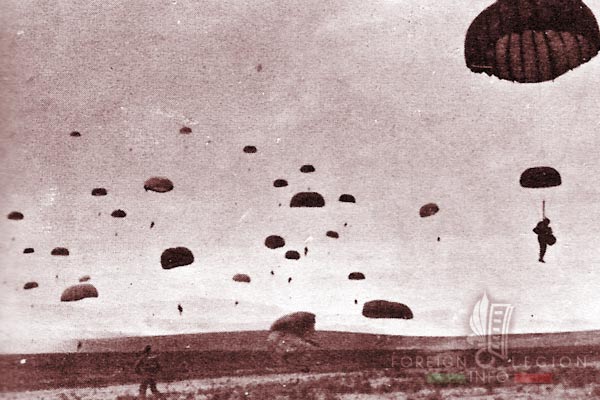
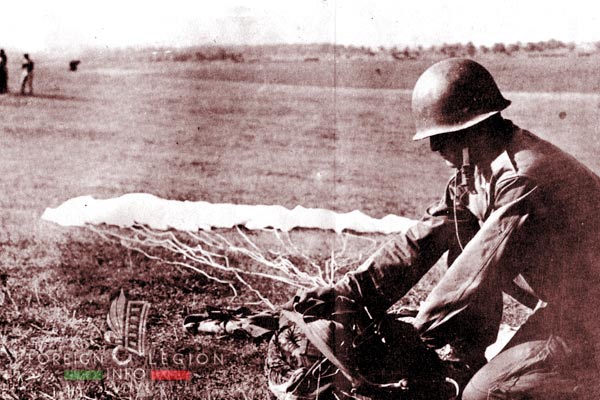
As with their seniors in the two BEPs and the 7e CIP, the legionnaires of the 3e BEP attended the training course in Philippeville alongside future paratroopers from regular French Army units. They conducted parachute jumps there in “sticks” of around fifteen men and thus earned the parachutist qualification badge. For the battalion as a whole, this amounted to about 6,000 jumps per year.
At the same time, BEP combat veterans repatriated from Indochina were assigned to the 3rd Battalion in Sétif to serve as cadre and instructors for the new recruits. Sétif thus became a true home base for the airborne legionnaires.
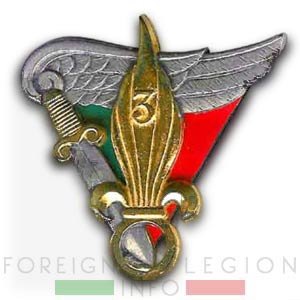
In 1950, the 3e BEP received its insignia, designed by Captain Darmuzai.
Two months after the battalion was created, in mid-January 1950, the first reinforcement of about 100 men destined for the two BEPs left for the Far East.
In August 1950, another major reinforcement provided by the 3e BEP was deployed to Indochina: Lieutenant Loth’s detachment, made up of 130 men.
The following month, Lieutenant Buonfils took command of the 11th Company; he would later become commanding officer of the 13th Foreign Legion Demi-Brigade (13e DBLE) in Djibouti from 1970 to 1972.
In October 1950, a violent battle took place in Tonkin (northern Vietnam), along Colonial Route 4 (RC4). There, the 1er BEP became the very first French airborne battalion to be lost in combat. Lieutenant Loth’s detachment took part in this battle and was wiped out as well.
In mid-December, the 48 survivors of the 1er BEP of RC4 arrived in Sétif, led by Captain Jeanpierre. They were received by the 3e BEP, in the presence of senior civil and military authorities.
Following this battle, the 3e BEP received orders to deploy to Indochina to re-form the lost battalion there. Thus, in mid-February 1951, Captain Darmuzai left Algeria with 13 officers, 32 non-commissioned officers, and 441 legionnaires. In Tonkin, one month later, the battalion became the new 1er BEP.
In Sétif, only a depot of the 3e BEP remained. Major Albert Brothier took command of it. However, the depot was quickly reinforced by new volunteers arriving from Sidi Bel Abbès, and a new 3e BEP was re-established in the months that followed.
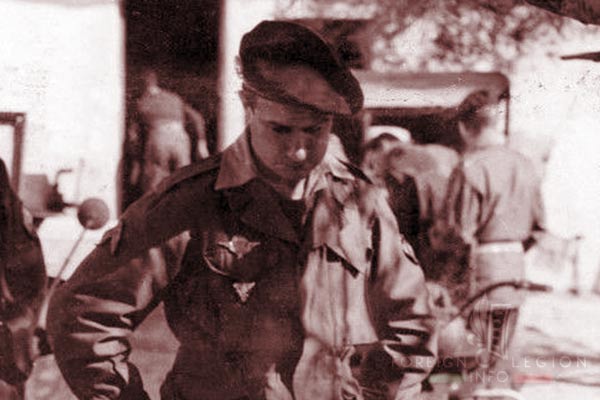
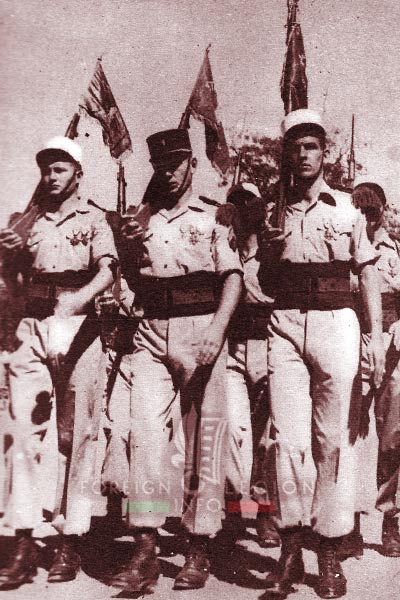
Later that year, the battalion adopted the green beret as its headgear, instead of the khaki-covered kepi (worn for maneuvers outside barracks). The green beret was first used by Legion paratroopers in Indochina in 1948, within the 3e REI’s Cie Para, the Legion’s first parachute unit. In 1951, both BEP battalions adopted it there, and the 3e BEP followed. Eight years later, in late 1959, the green beret would be prescribed as the official headgear for the entire Legion.


3rd Foreign Parachute Battalion in 1952
At the beginning of 1952, the French protectorate of Tunisia, located to the east of Algeria, saw its first acts of rebellion after several decades of peace. The Tunisian rebels (known as fellaghas), led by Habib Bourguiba, took advantage of the difficult situation France was facing in Indochina. They formed small armed groups in remote areas and launched their first attacks. French troops were put on alert in Tunisia and in northeastern Algeria.
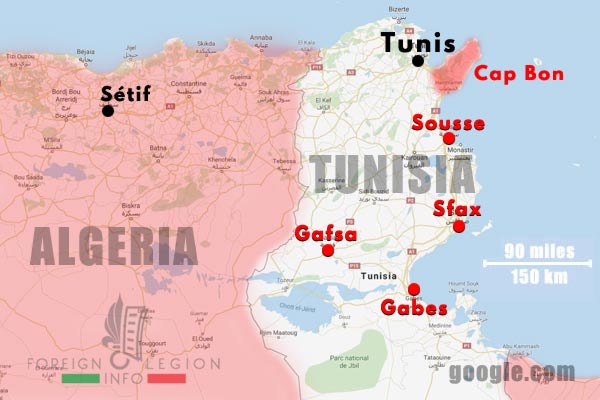
The 3e BEP was sent to the protectorate to take part in Operation Mars, alongside its comrades from the 6th Foreign Infantry Regiment (6e REI), stationed in Tunisia. On January 26, the battalion set up in Bou Ficha, a town located about 37 miles (60 km) south of Tunis, the capital. The battalion’s legionnaires then operated in the Cap Bon peninsula, particularly around Tazerka and Nabeul.
From February 4 to 10, they were responsible for maintaining order in Sousse, the former garrison of the 1st Foreign Cavalry Regiment (1er REC) between 1922 and 1940. In mid-February, they were tasked with maintaining order in Gafsa and Sfax, while the 9th Company patrolled in Gabès.
On March 12, in Sousse, a detachment of the battalion took part in a ceremony at the Legion cemetery to commemorate the fallen Legion cavalrymen buried there. Also present were 1er REC veterans, gathered around former Warrant Officer Millarewsky, as well as Colonel Gardy, then commanding officer of the Foreign Legion (and himself a former officer of the 1er REC).
In the end, the rebellion was suppressed and, in early July 1952, this little-known operation came to an end. The 3e BEP then returned to Sétif.
Meanwhile, in mid-May 1952, Major Brothier left the battalion to replace Captain Darmuzai in command of the 1er BEP in Indochina. He was succeeded by Major Paul Dussert. A veteran of Indochina, Dussert was among the very first Legion elements to arrive there in early 1946, commanding the 1st Company of the 2e REI. He then served for two years with the 2e BEP, even taking command of the unit for a short period before being seriously wounded and evacuated. He nonetheless remains a relatively little-known officer within the Foreign Legion.
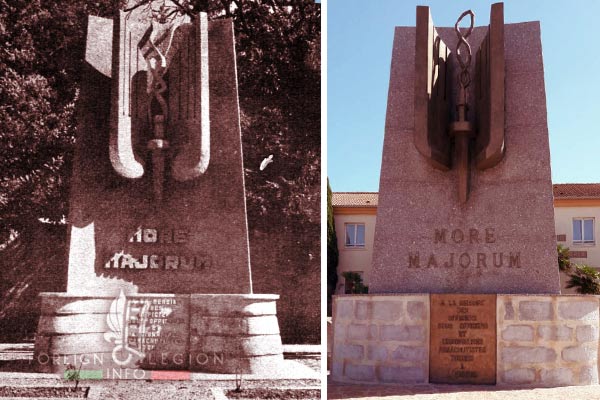
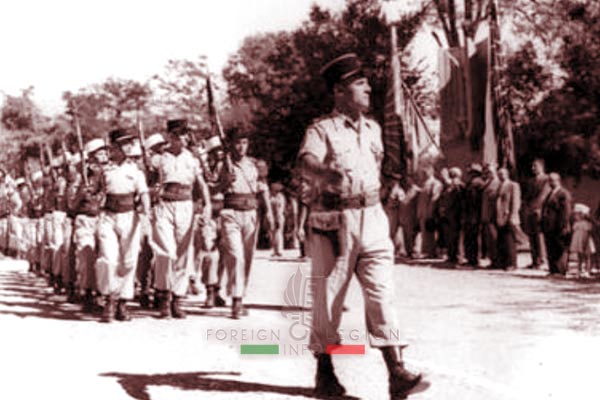
To commemorate the Foreign Legion paratroopers who fell in action, a war memorial was erected in the barracks of the battalion in Sétif. The project was supervised by Lieutenant Audoye, one of the three very first officers of Legion paratroopers and a veteran of the Parachute Company 3e REI in Indochina. The memorial was unveiled by Colonel Gardy on October 5, 1952. Fifteen years later, in 1967, it was transferred to Corsica and installed at what would become Camp Raffalli at Calvi, the new base of the 2nd Foreign Parachute Regiment (2e REP).


3rd Foreign Parachute Battalion, 1953–1954
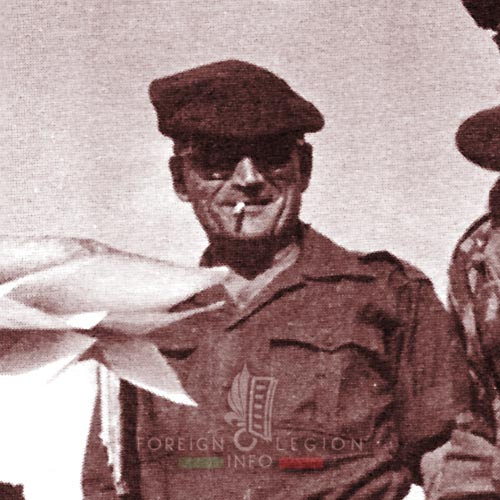
Very little information is available on the 3e BEP in 1953. At that time, all Foreign Legion units stationed in French North Africa were responsible for training enlisted volunteers and fresh legionnaires. The situation in Indochina was going from bad to worse. The French authorities asked the Legion to deploy additional drafts there. As a result, its units in North Africa were heavily reduced, sometimes to the limits of their capabilities, and the 3e BEP was affected as well.
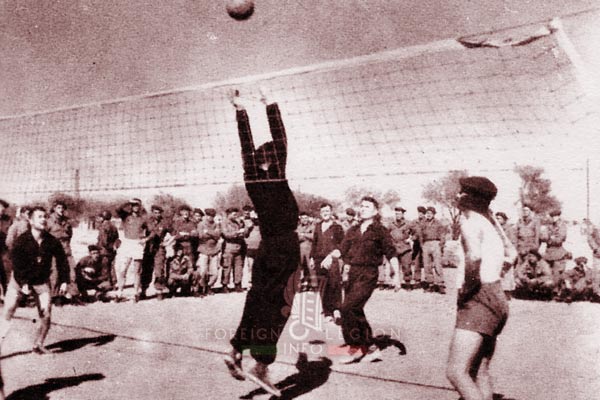
The battalion continued its training mission and also took part in several military exercises. When necessary, its various elements were able to contribute to maintaining order in the territory. The 3e BEP also engaged in extensive sports activities. Its teams played soccer, volleyball, handball, and practiced judo. In 1953 and 1954, the battalion’s handball team became the military champion of Algeria.
From mid-February to early March 1954, a large military maneuver was held between Oujda, in Morocco, another French protectorate located to the west of Algeria, and Nemours (today Ghazaouet), in Algeria. Its task was to restore order in this sector on the Morocco–Algeria border, where unrest had persisted since the previous October. The 3e BEP remained there for three weeks, alongside cavalrymen of the 2e REC.
At the same time, more and more reinforcements were arriving in Sétif to join the battalion. The situation in Indochina remained poor. In mid-March, a decisive battle began in Tonkin: the Battle of Dien Bien Phu. Both foreign parachute battalions (the 1er and 2e BEP) took part in it. A few weeks later, the authorities decided that another Foreign Legion battalion had to be deployed to the Far East and, if necessary, parachuted into Dien Bien Phu. The 3e BEP was chosen.
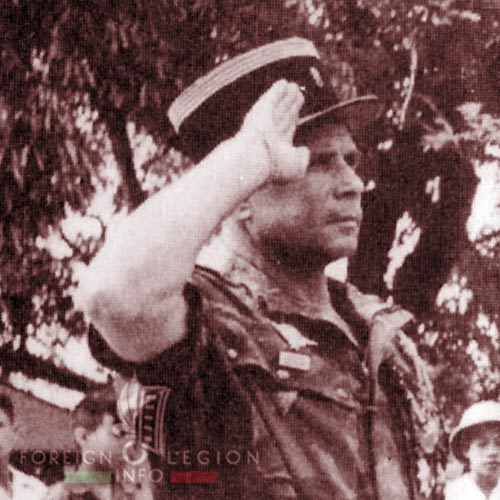
In mid-April, Major Georges Masselot volunteered to take command of the 3e BEP and deploy with the unit to Indochina. A well-known Foreign Legion officer, he had been seriously wounded with the 12e REI in France in 1940. He replaced Major Dussert, who refused to return to the Far East. On May 4, Masselot and the 3e BEP, comprising about 500 men, left Algeria.
Three days later, however, the Battle of Dien Bien Phu was over. Both BEPs had suffered heavy losses and were declared destroyed. On May 25, the 3e BEP under Masselot disembarked at Haiphong, in Tonkin. On June 1, by decision of the authorities, the battalion became the new 2e BEP.



Depot of the Foreign Parachute Battalions in 1954
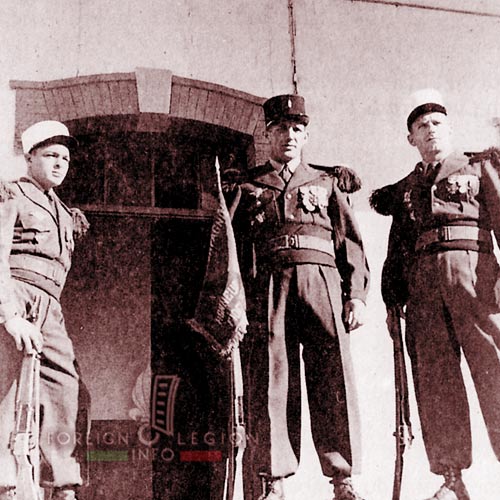
Meanwhile, a small depot remained in Sétif, redesignated the Company of the Foreign Parachute Battalions’ Depot (Compagnie de dépôt des BEP, CDBEP). Major Dussert kept command. Administratively attached to the Foreign Legion Joint Depot (Dépôt commun de la Légion, DCLE) at Sidi Bel Abbès, the depot consisted of a headquarters unit, a training group, and a group of veterans returned from Indochina. It continued to train parachutists from newly arrived recruits and to provide reinforcements for the two re-created BEPs in Indochina. This, however, did not last long.
In August 1954, the Indochina War came to an end. For the two BEPs, combat operations ceased. All French troops, including Foreign Legion units, had to leave the Far East after more than seventy years of French presence there.
In the meantime, in Philippeville, legionnaires were making monthly parachute jumps over the local military beach. A shooting competition was organized by the 41e DBP, in which the depot’s men distinguished themselves.
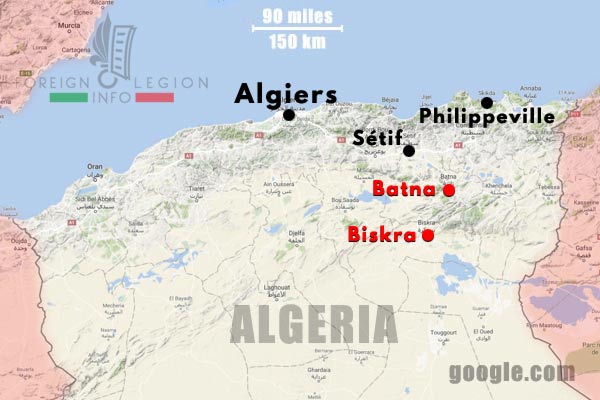
However, this relatively quiet life soon ended. In North Africa, another conflict was beginning for France. During the night of October 31 to November 1, 1954, more than thirty attacks were carried out at various points across Algerian territory, targeting in particular military objectives at Batna, Biskra, and in the Arris sector, in the heart of the Aurès–Nementcha mountain range. This wave of attacks, claimed by rebels of the National Liberation Front (FLN), is retrospectively regarded as the beginning of the Algerian War.
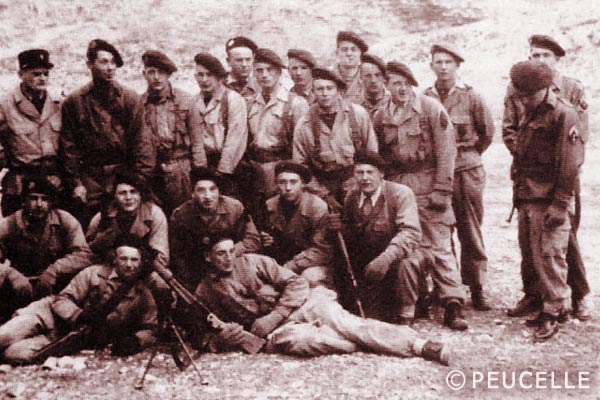
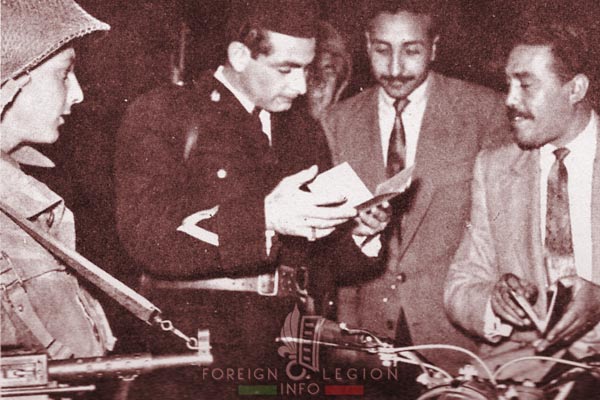
In immediate response, a provisional company (compagnie de marche) was formed within the BEPs’ depot. Commanded by Captain Audigier, with Lieutenant Fayette as his deputy, it brought together five officers, 19 noncommissioned officers, and 136 legionnaires – 160 men in total – and was sent toward Batna, where it arrived on November 2. This town lies in the Constantine Department, southeast of Sétif.
In the following days, the company took part in restoring order and successively retook several strongpoints and military bases at Batna, Edgard-Quinet, T’kout, Arris, and Biskra. It thus became the first Foreign Legion airborne unit to be committed to the Algerian War.
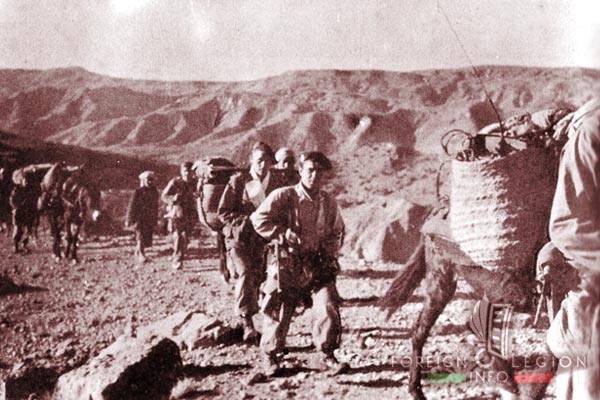
Afterward, the company patrolled in the Biskra sector until January 1955. Equipped with a dozen of mules, it did more than conduct security operations: it built a landing strip and built and improved tracks, thereby facilitating the movement of French forces in this strategic area at the beginning of the conflict. On January 15, it became the 9th Company 3e BEP.


3rd Foreign Parachute Battalion, 1954–1955
While the 1er and 2e BEP were still deployed in Indochina and the situation in North Africa was deteriorating, a decision was made to reconstitute the parachute battalion. For the third time, on December 1, 1954, the 3rd Foreign Parachute Battalion was re-formed in Sétif. Major Dussert retained command.
The battalion’s missions evolved with the end of the Indochina War and the intensification of insurgent activity in Algeria. Even though it continued to train legionnaires destined for the other BEPs, the 3e BEP became above all an operational unit, responsible for maintaining order and confronting the rebels.
3rd Foreign Parachute Battalion in Algeria, 1954–1955
- HQ Company – N/A
- 9th Company – Captain Audigier
- 10th Company – Captain Borel
- 11th Company – Captain Allaire
- Support Company – Captain Buonfils
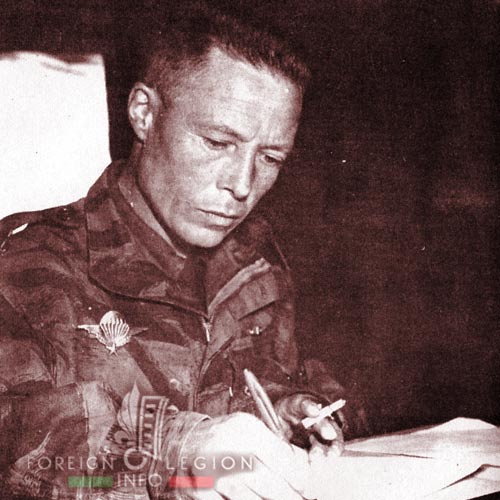
In mid-January 1955, a change-of-command ceremony took place. Major Darmuzai resumed command of his former battalion, which he had helped to form in 1949. Major Dussert left after nearly three years of commanding the legionnaires in Sétif.
In February, the 1er BEP, under Major Jeanpierre, returned from Indochina and was deployed to Tébessa, near the Tunisian border. There were now two BEPs operating in eastern Algeria.
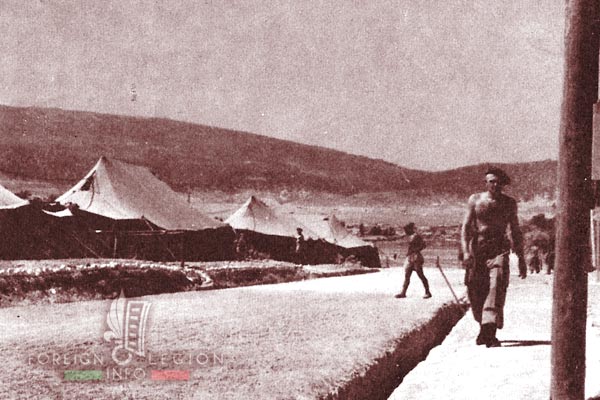
In April, the 3e BEP was still stationed in the Biskra sector. In May, it was transferred to Batna. The battalion set up at Transit Camp (Camp de Passage), a tent camp, and remained there until early November 1955.
On July 20, an engagement with rebels took place at Djebel Bosdane, a mountain northwest of Batna. Aspirant Cevaer (aspirant – officer cadet rank) and his platoon from the 10th Company killed the first rebel officially recorded as killed by the 3e BEP in Algeria. In August, the men took part in operations in the El Mhader range, northeast of Batna.
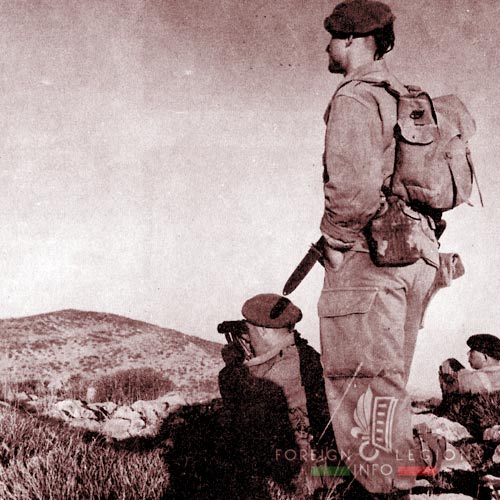

3e REP: 3rd Foreign Parachute Regiment
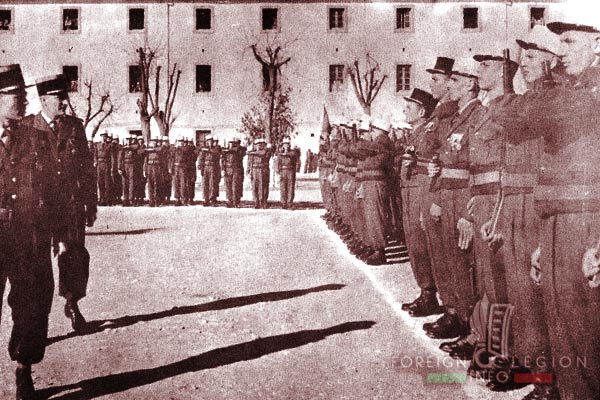
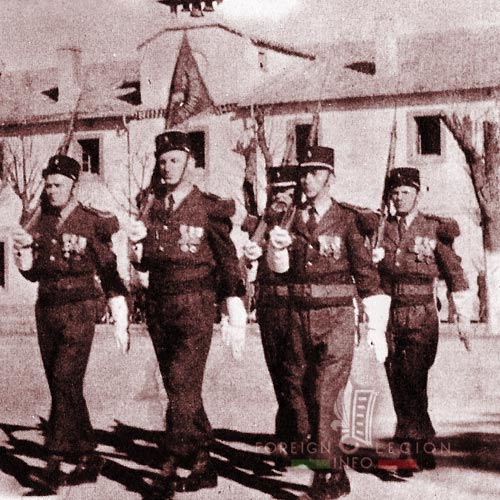
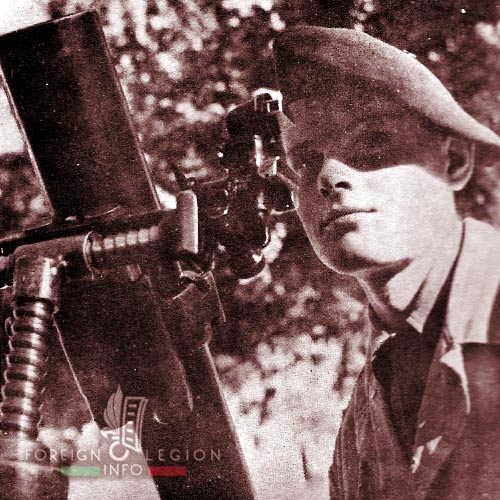
In 1955, the reorganization of the French Army in North Africa also affected the Legion’s paratroopers in Algeria. On September 1, 1955, the two BEPs were transformed into regiments. The battalion stationed at Batna thus became the 3rd Foreign Parachute Regiment (3e REP), still under the command of Major Darmuzai. The 3e REP continued the missions of the former battalion: it was an operational unit responsible for maintaining order in eastern Algeria and pursuing the rebels. In addition, it was tasked with training future paratroopers.
3rd Foreign Parachute Regiment in Algeria in 1955
- HQ Company
- 9th Company
- 10th Company
- 11th Company
- Support Company
As can be seen, the structure remained unchanged, as did the manpower. At the time, a typical platoon in the regiment consisted of 15 to 20 men, giving a total strength of around 350 legionnaires.
Between September and November 1955, the 3e REP conducted operations in the Batna sector and to the east, in the Khenchela area. The Support Company operated farther south, in the Biskra sector. On September 18, the 9th Company of the 3e REP destroyed a rebel group (its leader and ten men) northwest of Khenchela; two legionnaires were wounded.
On October 1, the 3e REP was officially stationed at Caserne Mangin in Philippeville. In practice, only the rear base commanded by Captain Ferrer, previously located in Sétif, was transferred there. The rest of the regiment continued operating in the Batna and Biskra sectors. In Batna on November 9, the 3e REP left its tent camp and moved into town, being quartered in a secondary school.
Later that month, operations intensified. On November 17, the platoon of Lieutenant Branca, from the 11th Company, took part in a skirmish with the rebels. The clash took place at Djebel Amrane, a mountain east of Batna. That day, four rebels were killed and four captured.
Two days later, on November 19, it was the turn of the 10th Company of the 3e REP to engage the rebels, at Djebel Fortass, in the Constantine Department. This time an officer was killed: Lieutenant Raymond Cherfallot. He became the first Legion parachute officer to be killed in North Africa. Seven years earlier, in mid-November 1948, Cherfallot had landed in Indochina with the 1st Company of the 1er BEP.
On November 26, the 9th Company fell into an ambush laid by the rebels at Djebel Maaguel, north of Batna. One legionnaire was killed and another wounded.
While the 3e REP was fighting Algerian insurgents, the 2e BEP under Major Masselot – actually the once renamed 3e BEP – was repatriated from Indochina. On November 18, it landed in Algeria and moved toward Philippeville. However, there was no room in Algeria for three Foreign Legion parachute units. One of them would not survive.
Therefore, on November 30, 1955, in Philippeville, the 3rd Foreign Parachute Regiment was disbanded. With only thirteen weeks of operational activity, it remains the permanent regiment of the Foreign Legion with the shortest existence.
The next day, the 3e REP helped form, along with the 2e BEP, a new unit: the well-known 2nd Foreign Parachute Regiment (2e REP), activated in Philippeville on December 1, 1955. While the 2e BEP provided the personnel for the 1st and 2nd Companies of the new regiment, the men of the 9th Company reinforced the 10th and 11th Companies, which in turn became the 3rd and 4th Companies of the 2e REP.
After six years, the history of the 3rd Foreign Parachute Regiment came to an end. Without its existence and its hard work, the two battalions in French Indochina could not have held out: it was this unit that twice made it possible to completely rebuild each battalion, and through which, over those six years, practically all Legion paratroopers who fought far away in the Far East passed.
As for Major Darmuzai, he took command of the Foreign Legion Motorized Group in Morocco (GPLEM) in January 1956. Three years later, he returned to the 2e REP and, in 1960, became its commanding officer. The following year, however, their paths suddenly and irrevocably parted. But that is another story.


———
Main information sources:
Képi blanc magazines
Légion Etrangère magazines
Vert et Rouge magazines
Foreign Legion bulletins
J. Brunon, G.-R. Manue, P. Carles: Le Livre d’Or de la Légion (Charles-Lavauzelle, 1976)
Henri Le Mire: L’épopée moderne de la Légion 1940-1976 (SPL, 1978)
Alain Gandy: La Légion en Indochine (Presses de la Cité, 1988)
J. P. Benavente: More Majorum – Le 2e REP (Technic Imprim, 1982)
Pierre Dufour: Légionnaires parachutistes (Editions du Fer, 1989)
Pierre Montagnon: Histoire de la Légion (Pygmalion, 1999)
Pierre Montagnon: Les parachutistes de la Légion (Pygmalion, 2005)
Jean-Luc Messager & collective: Légionnaires parachutistes 1948-2008 (L’Esprit du Livre, 2008)
———

———
Discover more about the history of Foreign Legion paratroopers::
Parachute Company of 3e REI
CERA: Foreign Airdrop Resupply Company
1st Foreign Parachute Regiment
2nd Foreign Parachute Battalion
Legionnaires paratroopers in WWII
———
The page was updated on: December 04, 2025