
The Franco-Prussian War of 1870–1871 was not only a conflict between two major European powers, but also a moment that drew foreign volunteers from across the continent and beyond. While the French Foreign Legion provided the formal framework for foreign military service, enlisting in it was far from the only path available. In the desperate months following the fall of the Second Empire, the new republican government authorized the creation of numerous irregular formations, independent of the Legion, in which foreigners – including British and American citizens – could also take up arms for France. From Garibaldi’s Army of the Vosges to small volunteer companies in besieged Paris, these units reflected the broad international sympathy that the French Republic attracted during the war.
This article is part of The Foreign Legion and the Franco-Prussian War.
Army of the Vosges
The Army of the Vosges is the largest and best-known formation on the French side representing foreign volunteers in the corps francs in the Franco-Prussian War. It was formed in October 1870 by Giuseppe Garibaldi, an Italian republican revolutionary and a strong opponent of the French Empire of Napoleon III. He was eager to offer his services to Léon Gambetta’s Government of National Defense, which had replaced the fallen Empire. Gambetta gave him command of all the corps francs (irregular volunteer formations composed of francs-tireurs) already operating in the Vosges area, a region in eastern France between Strasbourg and Paris.
Garibaldi established his headquarters in Dole and divided the Army of the Vosges into four brigades. Two were commanded by his two sons, Ricciotti and Menotti, two others by Cristiano Lobbia, an Italian officer, and Jozef Bossak-Hauké, a Polish general.
By the time of the armistice, the Army of the Vosges numbered between 10,000 and 24,000 men on paper, including both French corps francs and foreigners – mostly Italians and Spaniards. There were also South American volunteers from Uruguay, Argentina, and Brazil – about 300 men altogether – organized into the Légion Franco-Montévidéenne, the Légion Franco-Argentine, and the Corps francs de Rio de Janeiro. Greek and Egyptian volunteers also served in this Army.
The Army of the Vosges operated in eastern France, engaging Prussian forces in a series of skirmishes and defensive actions. In November, while fighting north of Dijon, Ricciotti Garibaldi’s brigade took 200 German prisoners and seized weapons and ammunition.
In late January 1871, Giuseppe Garibaldi moved with his army to Dijon. On January 21–23, 1871, the city was attacked by 4,000 Prussians, but Garibaldi’s troops were victorious. Moreover, they seized a flag of a German regiment, supposedly one of only two flags taken from the enemy during the war.
Nevertheless, there was also criticism of Garibaldi. After the end of hostilities, part of the newly elected National Assembly, dominated by conservative monarchists, as well as high military authorities, accused Garibaldi of acting as a political general and a revolutionary traitor who disobeyed orders and did not help General Bourbaki’s Army of the East, which led to the final defeat.
The Garibaldian tradition of volunteering for France resurfaced over four decades later. In 1914, during World War I, new Garibaldian volunteers formed the 4th Marching Regiment (“Garibaldian Legion”) of the 1st Foreign Regiment. The unit, led by Giuseppe Garibaldi’s grandson, Peppino, distinguished itself in the Argonne during the winter of 1914-1915.


Carabiniers of the 11th Arrondissement
This unit was a corps franc composed of foreign volunteers, mostly Dutchmen and Belgians, from the 11th Arrondissement of Paris, located on the right bank of the Seine between the Places de la Nation, de la République and de la Bastille. The unit was already active by September 1, 1870. Composed of 160 men, commanded by Captain Othon, it was assigned to the mayor of the district.
In September, this company was sent north of the capital, to Senlis. The “carabiniers” took part in operations to stop the enemy, alongside the French cavalry. Back in Paris, the Carabiniers of the 11th Arrondissement were assigned to the commander of the Saint-Denis fortified sector. With only two officers (Othon and Vithmann) and 66 men, the unit was deactivated on October 23, 1870.
Legion of the Volunteers of France
Conceived by General Heydenreich-Kruk, a Polish émigré officer who advocated the formation of a Polish volunteer force in France, the legion was officially created in Paris on September 7, 1870. Formed mainly of Polish volunteers living in the capital, the unit was commanded by Lieutenant Colonel Cailloué. The strength of the Legion of the Volunteers of France was set at 17 officers and 259 men. Consisting of two companies and a squadron (4 officers and 83 cavalrymen commanded by Mr. Fould and Captain d’Estampes), the unit took part in the siege of Paris.

Legion of the Friends of France
The Legion of the Friends of France was another corps franc organized in Paris and consisted of foreign volunteers. Led by General Van der Meeren, an experienced Belgian officer (also spelled as Vandermeeren), the unit had been in formation since September 9, 1870, and was quartered in the garden of the Palais-Royal, opposite the Louvre. The unit was composed mostly of Belgians and Swiss. They were joined by Americans, Englishmen, Russians, Spaniards, Italians, and men of other nationalities. Most of them were former servicemen. Recognized by the new government a few days after its creation, the unit obtained 300 British Snider-Enfield rifles. The Legion of the Friends of France consisted of three companies, numbering 18 officers and 236 men. Their uniform was dark brown with black rank insignia and chevrons, without any metallic ornaments, and they wore chestnut brown kepis. The well-disciplined legion was placed at the disposal of General Achille d’Exéa-Doumerc, one of the leaders of the defense of Paris. Serving as scouts in the forward posts, the “legionnaires” took part in the fighting at Bourget, Groslay, Brie-sur-Marne, and Villiers-sur-Marne.

British and American Ambulances
Foreign involvement on the French side was not limited to combat. British and American volunteers also organized medical assistance units that treated wounded French soldiers during the conflict.
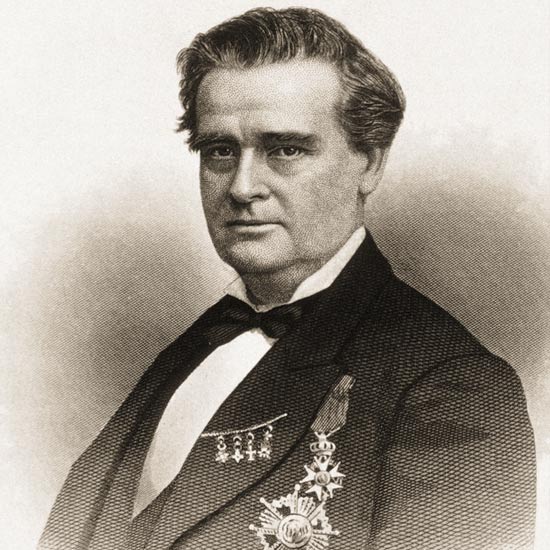
Although the United Kingdom and the United States remained neutral during the Franco-Prussian War, their citizens provided ambulances and other forms of medical assistance to combatants and civilians affected by the war. Three main units of this type were established: the Ambulance Anglaise (“English Ambulance”) of Richard Wallace, an English resident of Paris; the Anglo-American Ambulance of James Marion Sims, an American doctor and former surgeon to Empress Eugenie between 1863 and 1866; and the Ambulance Irlandaise (“Franco-Irish Ambulance”) of Charles P. Baxter, a British military surgeon. The latter was composed of men who did not join Captain Kirwan’s Irish Company of the Foreign Regiment (1870–1871).
The ambulances and their detachments served with the Armies of the North and the Loire, as well as during the siege of Paris, until the signing of the armistice in late January 1871.

Hanoverian Company
During the war, German members of the Foreign Legion were barred from deployment to France and had to remain in Algeria. It was there, paradoxically, that another unit composed of de facto German subjects was formed. Of all the volunteer units discussed in this article, the Hanoverian Company arguably had the closest ties to the Foreign Legion.
The men in question were veterans of the Hanoverian Legion – also known as the Guelphic Legion – which had served King George V of Hanover. The Kingdom of Hanover, a state in northwestern Germany, was annexed by Prussia after the Austro-Prussian War of 1866. The Guelphic Legion subsequently moved to France, where it remained until its dissolution in April 1870. By that time, the exiled King had run out of funds to maintain it, and Napoleon III was unwilling to reconstitute the unit for fear of provoking Prussia further. After the dissolution, the former soldiers scattered: some returned to Hanover, others emigrated to the United States, and a number made their way to Algeria.
When war broke out three months later, these Hanoverian exiles in North Africa became available for service. On January 5, 1871, a decree authorized the formation of an infantry company from their ranks for wartime service in Algeria.
On January 5, 1871, a decree authorized the formation of an infantry company from these Hanoverian exiles for wartime service in Algeria. Officially called the Hanoverian Auxiliary Company, the unit was formed in Oran and commanded by Captain Petitjean, who came from an African light infantry battalion. He was accompanied by Lieutenant Kreis and Second Lieutenant Liberti, both veterans of the Guelphic Legion. In terms of pay, benefits, and uniform, the company was organized along the same lines as French infantry units. Initially numbering about 160 men, it played no significant military role and was disarmed and disbanded after the signing of the peace treaty.
The unit may have been administratively attached to the Foreign Regiment headquartered in Mascara, in the same Oran province. The renowned French military archivist Aristide Martinien, who worked with primary documents at the Ministry of War, listed it as such – though this likely reflected an administrative arrangement for logistical purposes rather than an organic connection to the Legion.

Conclusion
The Franco-Prussian War was a tragic conflict. It deeply shook French society and the self-esteem of the French. In addition to its defeat, France lost most of Alsace and part of Lorraine, annexed in 1871 by the newly proclaimed German Empire.
What remains striking is the sheer variety of foreign involvement on the French side. Garibaldi’s Army of the Vosges fielded thousands of men in conventional military operations in eastern France. In besieged Paris, small corps francs of Dutch, Belgian, Polish, and other volunteers served in the city’s defense. British and American medical volunteers organized field ambulances that accompanied the French armies throughout the war. And in Algeria, a company of Hanoverian exiles was raised for wartime service – ironically at a time when German members of the Foreign Legion itself were barred from fighting in France. Nearly all of this took place outside the framework of the Foreign Legion, though the Hanoverian Company may have had slim administrative ties to it.
These units were improvised, often short-lived, and of uneven military value. Yet their existence reflects something that the formal structures of the French military could not easily accommodate: a broad and spontaneous international sympathy for the French Republic at one of its most desperate moments.
———
Main information sources:
Képi blanc magazines
Gen Grisot, Ltn Coulombon: Légion étrangère 1831 à 1887 (Berger-Levrault, 1888)
Various Authors: La Guerre de 1870-71 – La Défense Nationale En Province (R. Chapelot et Cie, 1911)
Various Authors: La Guerre de 1870-71 – Campagne de l’Armee du Nord – IV – Saint-Quentin (R. Chapelot et Cie, 1904)
Aristide Martinien: La Guerre de 1870-1871 – La Mobilistation de l’Armee – Mouvements des dépots (L. Fournier, 1912)
Ferdinand Lecomte: Guerre franco-allemande en 1870-1871 – Tome III (Genève et Bale, 1872)
Alexandre Dupont: Les volontaires espagnols dans la guerre franco-allemande de 1870-1871 (Mélanges de la Casa de Velázquez Nº 45, 2015)
Amédée Le Faure: Histoire de la guerre franco-allemande 1870-71 – Tome I (Garnier frères, 1875)
Gustave Schelle: Œuvres de Turgot – Tome III (Librairie Félix Alcan, 1919)
La Liberté daily (Septembre 1870)
La Petite Presse daily (Novembre 1870)
Le Rappel daily (Novembre 1870)
L’armée de la Loire 1870-1871 (Fr)
Google.com
Wikipedia.org
———

—
Cet article en français : Unités de volontaires étrangers hors de la Légion pendant la guerre de 1870
—
Discover the Foreign Legion’s history:
Foreign Legion in the Balkans: 1915-1919
French Foreign Legion in World War II
Second Foreign Legion – Swiss Legion
—
The page was updated on: March 14, 2026